
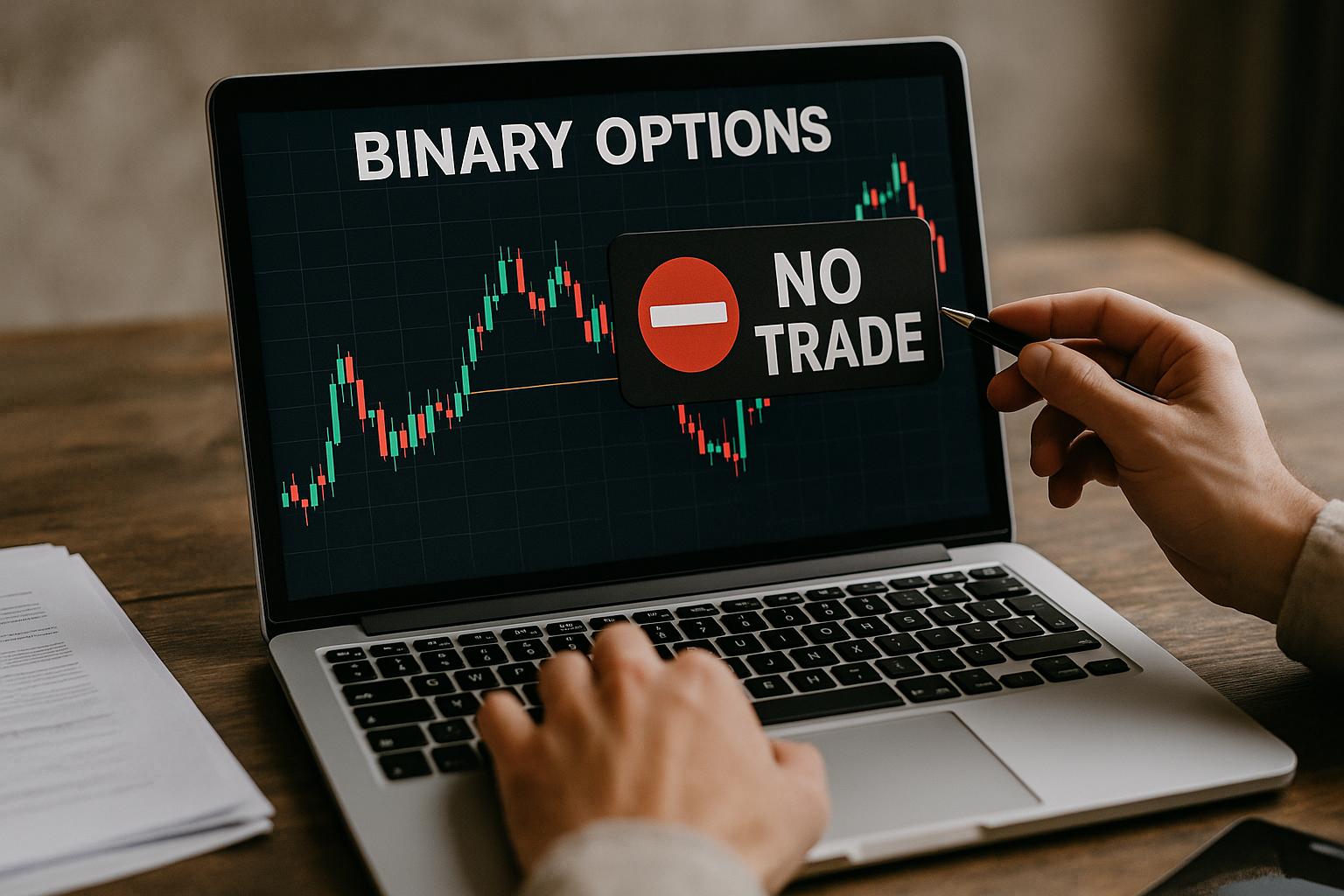
How to recognise no trade conditions in binary options

Understanding No Trade Conditions in Binary Options

To engage effectively in the world of binary options trading, one must not only seize opportunities when they arise but also recognize the moments when it is prudent to refrain from trading. The market conditions can occasionally present challenges that make trading unprofitable. Identifying these no trade conditions is crucial for minimizing potential losses and maximizing profits during more favorable times. Here, I will dive deeper into the key indicators that signal no trade conditions.

Market Volatility

Market volatility represents the degree of variation in trading prices over a particular period. While high volatility can present opportunities for profit, it can equally manifest significant risks. The rapid and unpredictable price changes associated with high volatility make forecasting price movements difficult. This scenario can prove problematic for traders trying to predict price direction with accuracy. Using technical analysis tools like Bollinger Bands is advisable to measure market volatility levels, aiding traders in making well-informed decisions. By analyzing the width of these bands, traders get a sense of market volatility and can decide when to stay out of trading to avoid undue risk.

Unscheduled High-Impact News Events

The financial markets can be profoundly affected by unscheduled news events such as political turmoil, natural disasters, or sudden economic shifts. Such events can cause erratic fluctuations in asset prices, leading to potential setbacks for traders unprepared for these dynamic shifts. Traders should keep an eye on economic calendars and news outlets to anticipate and react to these changes. Waiting for the dust to settle after such events is often the prudent course, allowing traders to reassess the market landscape and enter trades when conditions become clearer and more predictable.

Low Liquidity Periods

Low liquidity refers to periods when trading volumes are reduced, leading to increased difficulty in executing trades at desired prices. This condition often results in irregular price movements. Traders typically encounter these periods outside of regular trading hours or during specific public holidays. Recognizing low liquidity times can help prevent the challenges associated with trading in an illiquid market, which may include erratic price changes and wider spreads. By avoiding trades during these periods, traders can reduce the potential for losses stemming from liquidity constraints.

Price Patterns Offering No Clear Signal

There are times when market charts fail to reveal clear trends or present mixed signals. This situation arises when technical analysis tools and chart patterns provide conflicting interpretations. In such cases, it is advisable to exercise patience and wait for a clearer signal to emerge. The appearance of a more distinct trend provides better trading opportunities. Traders can rely on tools such as pattern analysis to identify when more unequivocal signals are formed, allowing for more confident decision-making.

Major Support and Resistance Levels

Major support and resistance levels function as psychological barriers in the trading landscape. Prices can display volatility near these levels, leading to false breakouts that may mislead traders into hasty decisions. While trading around these points can yield high rewards, it is fraught with volatility and unpredictactical analysisity. To mitigate these risks, traders should await confirmation of a sustained price movement beyond these levels. Confirmed breakout opportunities can then be leveraged for more stabilized trades with reduced risk.

Technical and Fundamental Analysis Conflicts

Discrepancies between technical analysis and fundamental analysis can lead to uncertain trading conditions. Technical analysis focuses on price patterns and historical data, whereas fundamental analysis considers economic indicators and broader market trends. Occasions where technical trends suggest an upward trajectory, while fundamental indicators point towards a potential downturn, create trading ambiguities. During times of conflict between these two analyses, traders are encouraged to seek alignment. The harmonization of technical and fundamental insights strengthens trading strategies and enhances decision-making processes.

Recognizing no trade conditions is an inherent part of developing a disciplined trading strategy. By sharpening your understanding of the market environment and indicators that portend unfavorable trading conditions, traders can substantially improve their decision-making ability. This vigilance allows for better judgment about when to enter or exit the market, ultimately contributing to more productive and profitable trading outcomes.


How to stop chasing price in binary options trading

Understanding the Concept of Price Chasing

In the dynamic world of binary options trading, **price chasing** is a phenomenon that often traps inexperienced traders. It occurs when traders impulsively react to market trends, typically buying when the market is at its peak or selling when it is at its lowest point. Such actions are rarely based on a well-thought-out strategy; instead, they emerge from emotional responses to rapid market fluctuations. This unstrategic approach often leads to significant losses. Hence, gaining insight into the factors that contribute to price chasing is vital for devising a disciplined trading plan.

Avoiding Impulsive Decisions

Avoiding impulsive trading decisions is crucial to minimizing losses in binary options trading. Emotional reactions, when left unchecked, can cloud judgment and lead to decisions that lack proper analysis or strategy. Therefore, it is critical that traders cultivate the ability to manage their impulses. Keeping a rational mindset amidst volatile market conditions is a crucial skill in trading. It entails focusing on methodical trade planning and consciously steering clear of decisions driven by momentary market shifts.

The Importance of a Trading Plan

An effective trading plan serves as a trader’s roadmap, outlining the path to success and safeguarding against emotional trading behaviors like price chasing. It covers essential components such as:

Entry and Exit Points: The foundation of any trading plan should be the establishment of clear criteria for entering and exiting trades. This involves identifying specific price levels or patterns that signal a good opportunity to buy or sell, helping traders act based on predefined conditions rather than spontaneous emotions.

Risk Management: Effective risk management strategies are non-negotiable in reducing potential losses. Traders ought to employ tools like stop-loss orders, which automatically sell an asset when it reaches a certain price, thus limiting downside risk. Diversifying investments and setting limits on the amount invested in a single trade can further mitigate risks.

Market Analysis: Regular and detailed market analysis enables traders to make informed decisions. This involves the application of both technical and fundamental analysis techniques to assess current market conditions and predict future trends. Staying updated with financial news and economic indicators is equally important.

By staying true to a well-structured trading plan, traders can keep emotional impulses in check and base their decisions on logical analysis rather than irrational reactions.

Utilizing Technical Indicators

Technical indicators play a pivotal role in assisting traders to comprehend market trends and foresee possible reversals. By integrating indicators like moving averages, Relative Strength Index (RSI), and Bollinger Bands into their strategy, traders can gain a more objective perspective on market developments.

Moving Averages: These indicators help in smoothing out price data to identify the direction of the trend. They can provide insights into potential entry or exit points by showing where the market price correlates with the average price over a specific period.

RSI (Relative Strength Index): RSI is a momentum oscillator that measures the speed and change of price movements, aiding in identifying overbought or oversold conditions that may indicate an imminent reversal.

Bollinger Bands: These bands consist of moving averages and provide a relative definition of high and low prices, helping traders anticipate potential breakouts or periods of consolidation.

For additional comprehensive information on employing technical indicators effectively, traders can pursue educational materials, such as advanced trading courses or explore forex trading educational websites.

Maintaining Patience and Discipline

In trading, patience coupled with discipline can significantly influence outcomes. Overtrading, often a consequence of price chasing, can erode not only financial capital but also emotional resilience. It’s essential for traders to recognize that they don’t need to react to every market fluctuation and should remain committed to their strategic trading plan. Achieving success in trading is akin to a marathon, not a sprint, where consistency and strategy override short-lived market hypes.

In essence, avoiding price chasing in the realm of binary options trading revolves around maintaining a structured, calculated approach while effectively utilizing technical analysis and upholding disciplined trading practices. Since trading psychology plays a significant role in decision-making, consistently working on improving one’s emotional intelligence in conjunction with adhering to a well-defined plan, significantly boosts the prospects for enduring success in the market.

Through a better understanding of the psychological components attached to trading, coupled with steadfast adherence to a strategic plan, traders are more likely to navigate the complexities of the market adeptly, thereby enhancing their profitability over the long term.

How to deal with hesitation before a binary options entry

Understanding Binary Options

Binary options are a kind of financial instrument that enables traders to speculate on the price movement of various types of assets, including currencies, stocks, and commodities. The essence of trading binary options lies in a straightforward decision: Will the asset price increase or decrease within a predetermined time frame? Despite the apparent simplicity of this decision-making process, many traders experience a degree of hesitation before committing to a trade. Addressing the underlying causes of this hesitation is critical to making informed and effective trading decisions.

Identifying the Source of Hesitation

Before one can address hesitation in trading binary options, it is essential to identify the potential sources of this hesitation. These sources can include a lack of information, emotional influences, or operational confusion.

Lack of Information: One of the primary reasons for hesitating might be insufficient market data or a lack of understanding of the specific asset involved. When traders do not have thorough insights into market conditions or fail to conduct a detailed analysis of the asset, uncertainty can naturally arise, leading to indecision.

Emotional Factors: Emotions can greatly impact trading decisions. Feelings such as fear of loss, greed, or overconfidence are common emotions that traders may encounter. If left unchecked, these emotional elements can cloud judgment and lead to hesitation or impulsive decision-making.

Operational Confusion: Unfamiliarity with the trading platform or a lack of understanding of the mechanics of binary options can also contribute to hesitation. Without a clear understanding of how the trading process works, confidence may falter, leading to a cautious approach.

Strategies to Overcome Hesitation

To minimize hesitation effectively, traders can employ a combination of education, practice, and technical analysis. This requires preparation and a systematic approach to trading.

Education and Research: Traders should be committed to continually educating themselves about market conditions and the elements affecting their chosen asset. By engaging with reputable financial education platforms and analyzing current market trends, traders can gather the necessary information to make informed decisions.

Practice with Demo Accounts: Utilizing demo accounts can be an invaluable method for practicing trades without the risk of financial loss. These practice accounts enable traders to build confidence and understand the impact of various factors on binary options in a stress-free environment.

Develop a Trading Plan: It is advisable to create a detailed trading plan outlining when and how to enter and exit trades. Such a plan can help traders make logical and analytical decisions, reducing the influence of emotions on their trading choices.

Emotional Management Techniques

Managing emotions effectively is crucial in overcoming hesitation. Techniques and strategies aimed at controlling emotional responses can significantly aid in this effort.

Mindfulness and Breathing Techniques: Practicing mindfulness and employing deep breathing techniques can calm the nerves, enabling clearer and more rational decision-making processes.

Setting Limits: Establishing predetermined limits on how much you are willing to risk or gain can prevent impulsive and emotional trading decisions. Regularly sticking to these limits fosters discipline and reduces emotional trading.

Utilizing Technological Tools

Advancing technology provides tools that can assist traders in decision-making processes and help mitigate hesitation.

Trading Software: Certain software applications offer predictive analytics and trading signals. These tools provide traders with data-driven insights that can be used to make better-informed decisions, thereby reducing uncertainties and hesitation.

Automated Trading Systems: Using automated trading systems can help by executing trades automatically based on predefined criteria. This not only saves time but also reduces emotional interference, as the system follows a set plan without the influence of human emotions.

Reviewing Past Trades

Regularly reviewing past trades is an essential practice for traders. By analyzing both successful and unsuccessful trades, traders can gain valuable insights into their trading patterns and decision-making processes. This retrospective analysis helps identify potential areas of improvement and allows for the refinement of trading strategies.

In conclusion, by addressing hesitation through education, practice, emotional management, technological tools, and regular review of past trades, traders can significantly reduce their apprehension before entering binary options trades. As a result, they can approach trading with more confidence, which can, in turn, lead to more successful and strategically sound trading outcomes.