
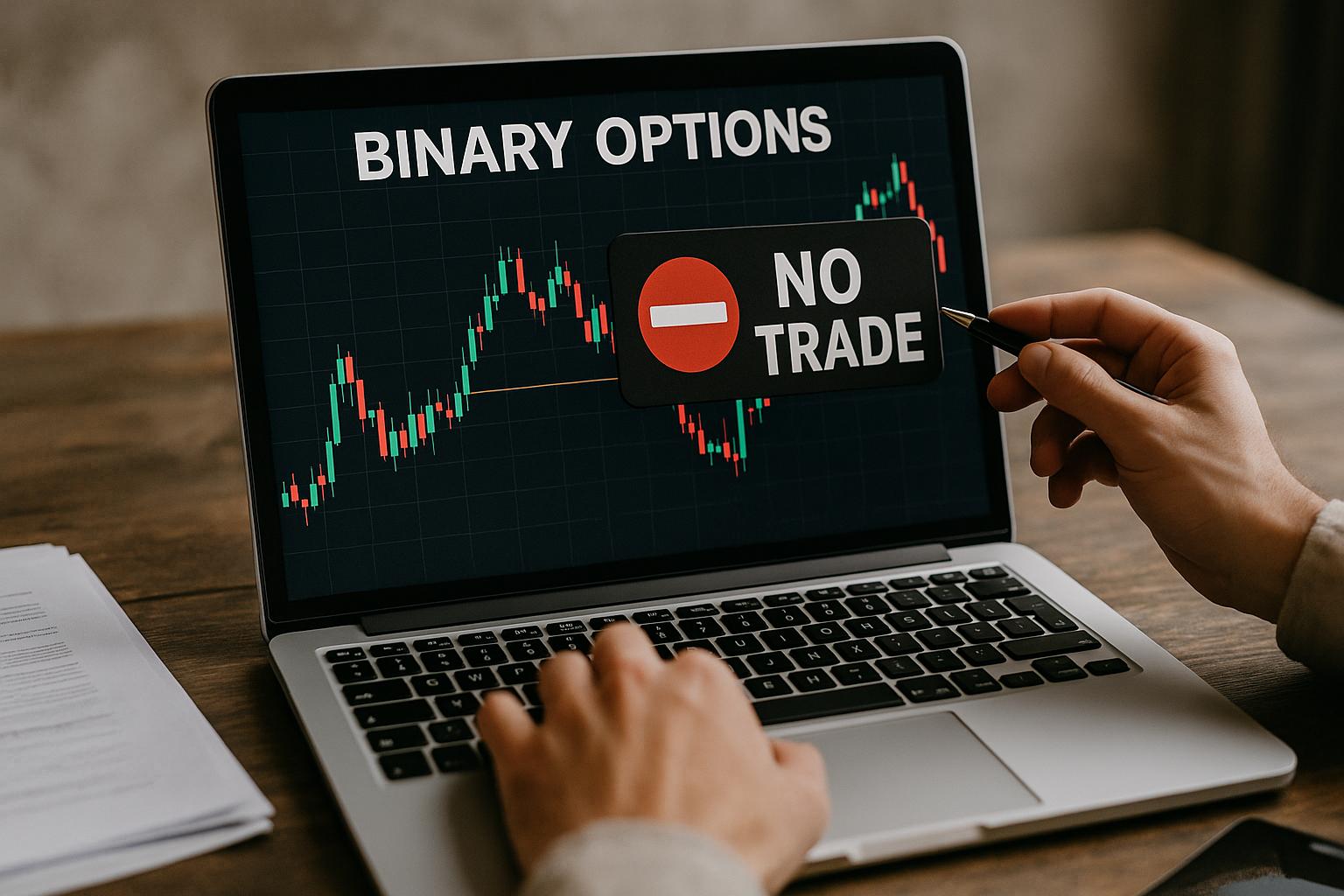
Understanding No Trade Conditions in Binary Options
To engage effectively in the world of binary options trading, one must not only seize opportunities when they arise but also recognize the moments when it is prudent to refrain from trading. The market conditions can occasionally present challenges that make trading unprofitable. Identifying these no trade conditions is crucial for minimizing potential losses and maximizing profits during more favorable times. Here, I will dive deeper into the key indicators that signal no trade conditions.
Market Volatility
Market volatility represents the degree of variation in trading prices over a particular period. While high volatility can present opportunities for profit, it can equally manifest significant risks. The rapid and unpredictable price changes associated with high volatility make forecasting price movements difficult. This scenario can prove problematic for traders trying to predict price direction with accuracy. Using technical analysis tools like Bollinger Bands is advisable to measure market volatility levels, aiding traders in making well-informed decisions. By analyzing the width of these bands, traders get a sense of market volatility and can decide when to stay out of trading to avoid undue risk.
Unscheduled High-Impact News Events
The financial markets can be profoundly affected by unscheduled news events such as political turmoil, natural disasters, or sudden economic shifts. Such events can cause erratic fluctuations in asset prices, leading to potential setbacks for traders unprepared for these dynamic shifts. Traders should keep an eye on economic calendars and news outlets to anticipate and react to these changes. Waiting for the dust to settle after such events is often the prudent course, allowing traders to reassess the market landscape and enter trades when conditions become clearer and more predictable.
Low Liquidity Periods
Low liquidity refers to periods when trading volumes are reduced, leading to increased difficulty in executing trades at desired prices. This condition often results in irregular price movements. Traders typically encounter these periods outside of regular trading hours or during specific public holidays. Recognizing low liquidity times can help prevent the challenges associated with trading in an illiquid market, which may include erratic price changes and wider spreads. By avoiding trades during these periods, traders can reduce the potential for losses stemming from liquidity constraints.
Price Patterns Offering No Clear Signal
There are times when market charts fail to reveal clear trends or present mixed signals. This situation arises when technical analysis tools and chart patterns provide conflicting interpretations. In such cases, it is advisable to exercise patience and wait for a clearer signal to emerge. The appearance of a more distinct trend provides better trading opportunities. Traders can rely on tools such as pattern analysis to identify when more unequivocal signals are formed, allowing for more confident decision-making.
Major Support and Resistance Levels
Major support and resistance levels function as psychological barriers in the trading landscape. Prices can display volatility near these levels, leading to false breakouts that may mislead traders into hasty decisions. While trading around these points can yield high rewards, it is fraught with volatility and unpredictactical analysisity. To mitigate these risks, traders should await confirmation of a sustained price movement beyond these levels. Confirmed breakout opportunities can then be leveraged for more stabilized trades with reduced risk.
Technical and Fundamental Analysis Conflicts
Discrepancies between technical analysis and fundamental analysis can lead to uncertain trading conditions. Technical analysis focuses on price patterns and historical data, whereas fundamental analysis considers economic indicators and broader market trends. Occasions where technical trends suggest an upward trajectory, while fundamental indicators point towards a potential downturn, create trading ambiguities. During times of conflict between these two analyses, traders are encouraged to seek alignment. The harmonization of technical and fundamental insights strengthens trading strategies and enhances decision-making processes.
Recognizing no trade conditions is an inherent part of developing a disciplined trading strategy. By sharpening your understanding of the market environment and indicators that portend unfavorable trading conditions, traders can substantially improve their decision-making ability. This vigilance allows for better judgment about when to enter or exit the market, ultimately contributing to more productive and profitable trading outcomes.
This article was last updated on: October 16, 2026